

Home inspection, new build
New-Construction Inspection in the Phoenix Metro
A new-construction inspection is an independent, third-party look at your brand-new home while the builder still controls the site, so you are not relying solely on the builder's own crews and the jurisdiction's permit inspections to catch what got missed. It does not replace or override the city or county building department, and it does not certify that the home meets code; it gives you an objective read on installed condition and workmanship at the phase you choose to inspect.
- An independent third party
- Pre-drywall to 11-month
- From $285 residential
Why a private inspection
The city already inspected it. This answers a different question.
The decision here is not whether a brand-new home has problems worth checking. It is whether to add a private set of eyes to a process you did not watch and cannot easily reopen once drywall closes and closing papers are signed. A new build feels like the one purchase that should not need an inspection: it is spotless, nothing is worn out, and a municipal inspector has already signed off at framing, rough-in, and final. But the jurisdiction's inspections confirm that permitted work meets the adopted building code for life-safety and for issuing a certificate of occupancy. They are pass-or-fail checks against code minimums, run on a schedule that serves the permit, not a room-by-room evaluation of workmanship performed on your behalf. A third-party inspection is a different instrument aimed at a different question: how was this home actually built and installed, and what would you want addressed before the builder considers the job finished.
The municipality
Code enforcement
- Verifies permitted work meets the adopted building code
- Clears the home for a certificate of occupancy
- Pass-or-fail checks on code minimums, run for the permit
- The authority to rule on code belongs to the building department
AZHI
Independent third-party inspection
- Reports installed condition and workmanship on your behalf
- Measured against general standards and manufacturer guidance
- A room-by-room read of a process you did not watch
- Leverage and a to-do list for the builder, not a code citation
Before the walls close
The one window to see what runs inside the walls
Once the drywall goes up, the framing, wiring and plumbing in every wall are sealed away for the life of the house. Pre-drywall is the one visit where an inspector can see them at all.
Timing is the whole game
Three phases, and each has a hard window
Timing is the whole game at this stage, and it splits into distinct decision points rather than one appointment. A pre-drywall inspection happens after framing, electrical, plumbing, and mechanical rough-ins are in but before insulation and drywall cover them, which is the only window to see wiring, pipe connections, framing, and wall penetrations without cutting into a finished surface later. A final-walk inspection happens when the home is essentially complete but before you close, so findings can be attached to the builder's punch list while you still have leverage. An 11-month inspection happens near the end of a typical first-year builder warranty, so any items that surfaced after move-in can be documented and submitted before that warranty window closes. Which of these phases AZHI performs, and how far in advance each must be scheduled, is something to confirm with AZHI directly when you book, because it depends on current service offerings and on the builder's own site rules.
- 1Only window
Pre-drywall
framing and rough-ins visible, before they are covered
- 2
Final walk
a complete home, before you close; feeds the punch list
- 3
11-month
near the end of the first-year builder warranty
Which phases AZHI performs, and how each is scheduled, is confirmed with AZHI directly. Access to the builder's active site is arranged through the builder.
Each has a hard window: once drywall goes up, once you close, once the warranty year ends, that particular look is gone.
Two things shape every phase
Until you close, it is the builder's jobsite
Two constraints shape what any phase can deliver, and both trace back to a single fact: until you close, this is the builder's active jobsite, not your home. Access is not automatic. The builder or superintendent controls entry, sets the schedule, and may require notice or their own sign-off before a private inspector walks the site, so the coordination is as much about permission and timing as it is about the inspection itself. And an inspection reflects only what is installed and testable on the day. Systems that are roughed-in but not energized, appliances not yet set, fixtures not connected, or exterior and grading work not yet done cannot be evaluated as if they were finished. The practical move is to line up the visit with the construction calendar so the phase you are paying to see is genuinely ready, and to plan for a return look at anything that was not.
Access runs through the builder
The builder or superintendent controls entry, sets the schedule, and may require notice or a representative on site. Ask early how they handle third-party inspections and how a pre-drywall visit fits their drywall schedule, before that window is imminent.
Only what is installed and testable
Systems roughed-in but not energized, appliances not set, fixtures not connected, or grading not yet done cannot be evaluated as finished work; they are noted as not-inspected. Expect the possibility of a return look at anything the schedule left unready.
Before the drywall goes up
What a pre-drywall walk actually looks at
Once the walls are closed these are covered for the life of the house. This is the window to see them.
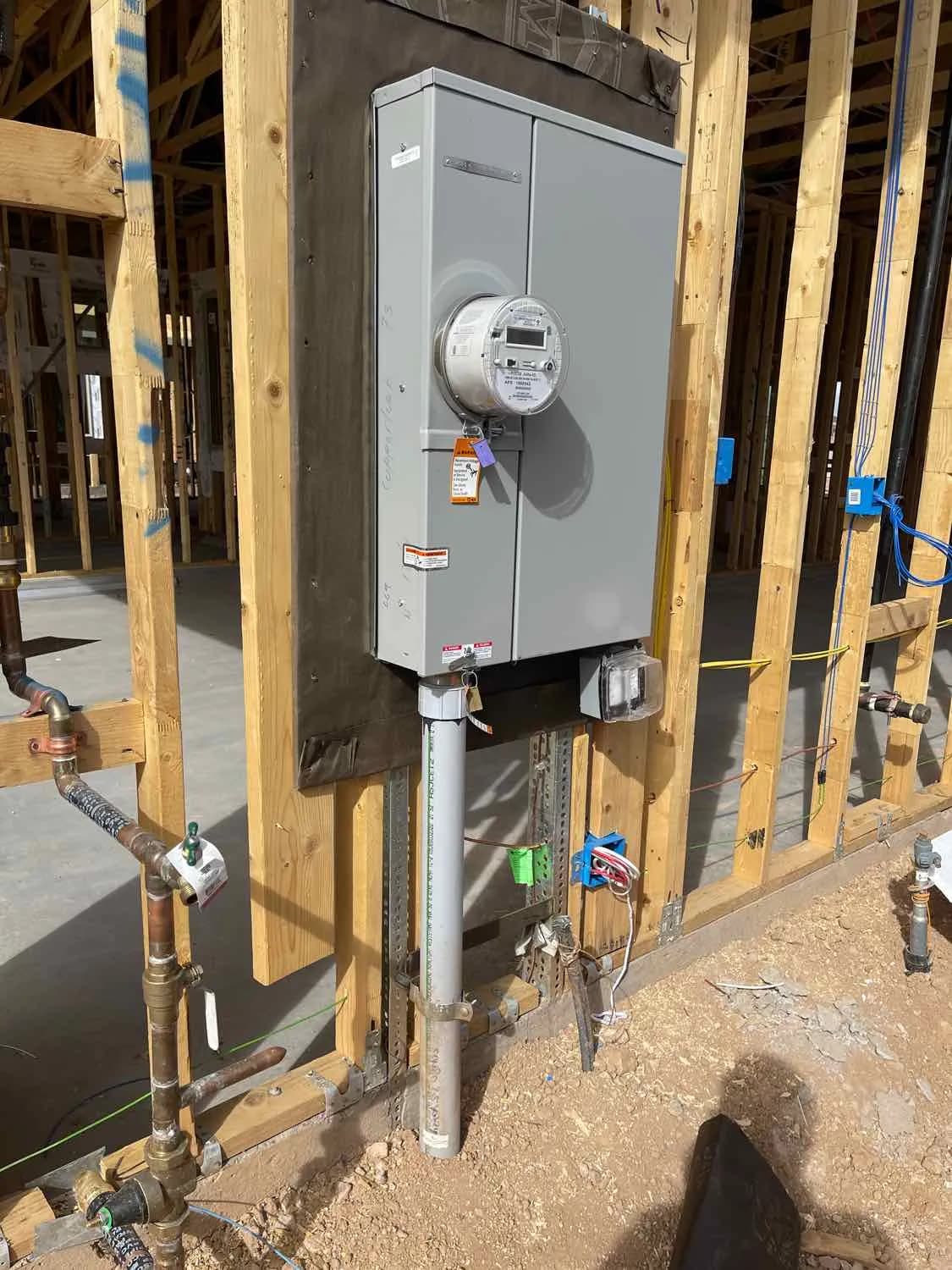
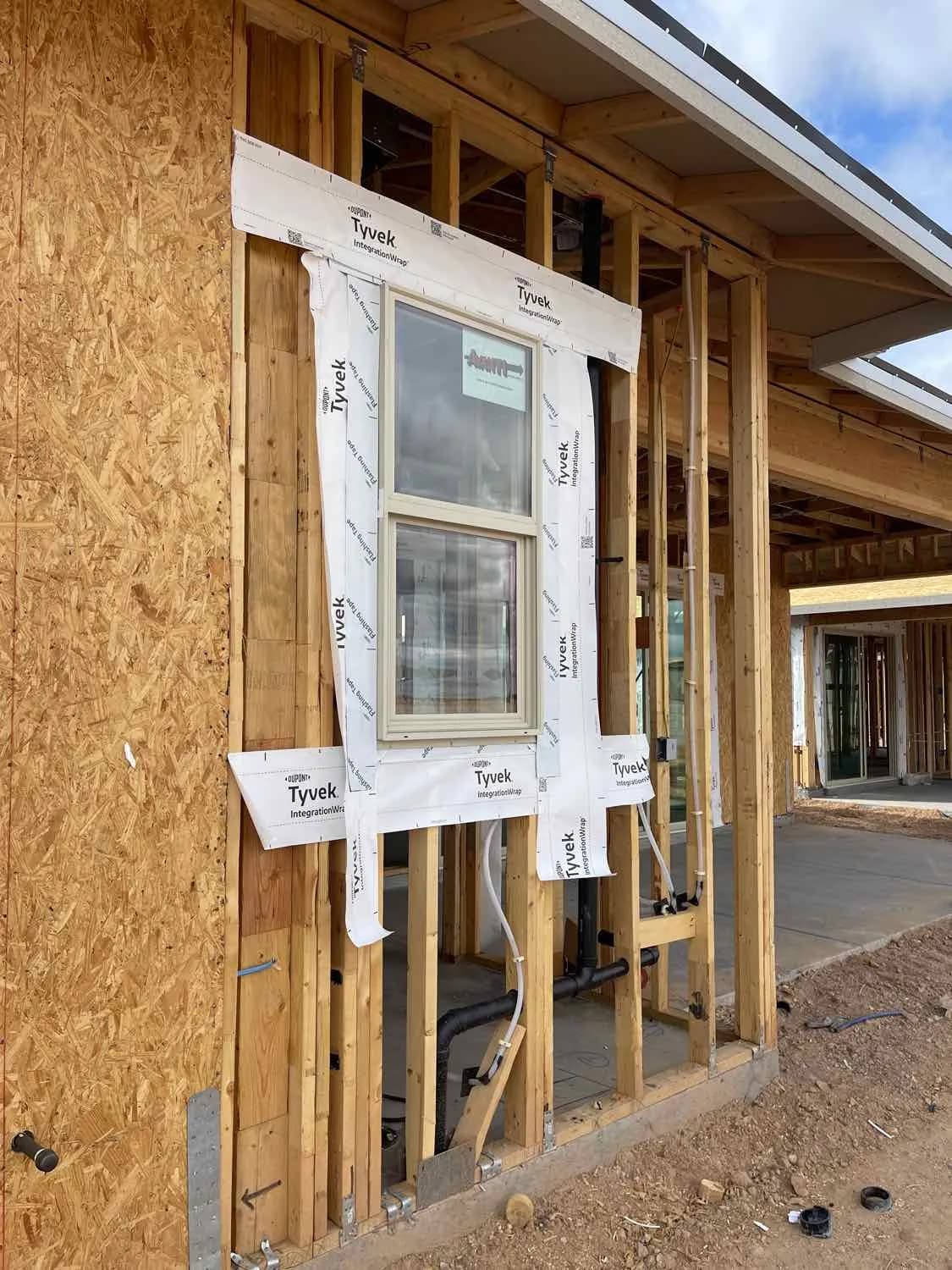
Service equipment and the meter, on open framing Window flashing and house wrap, before siding 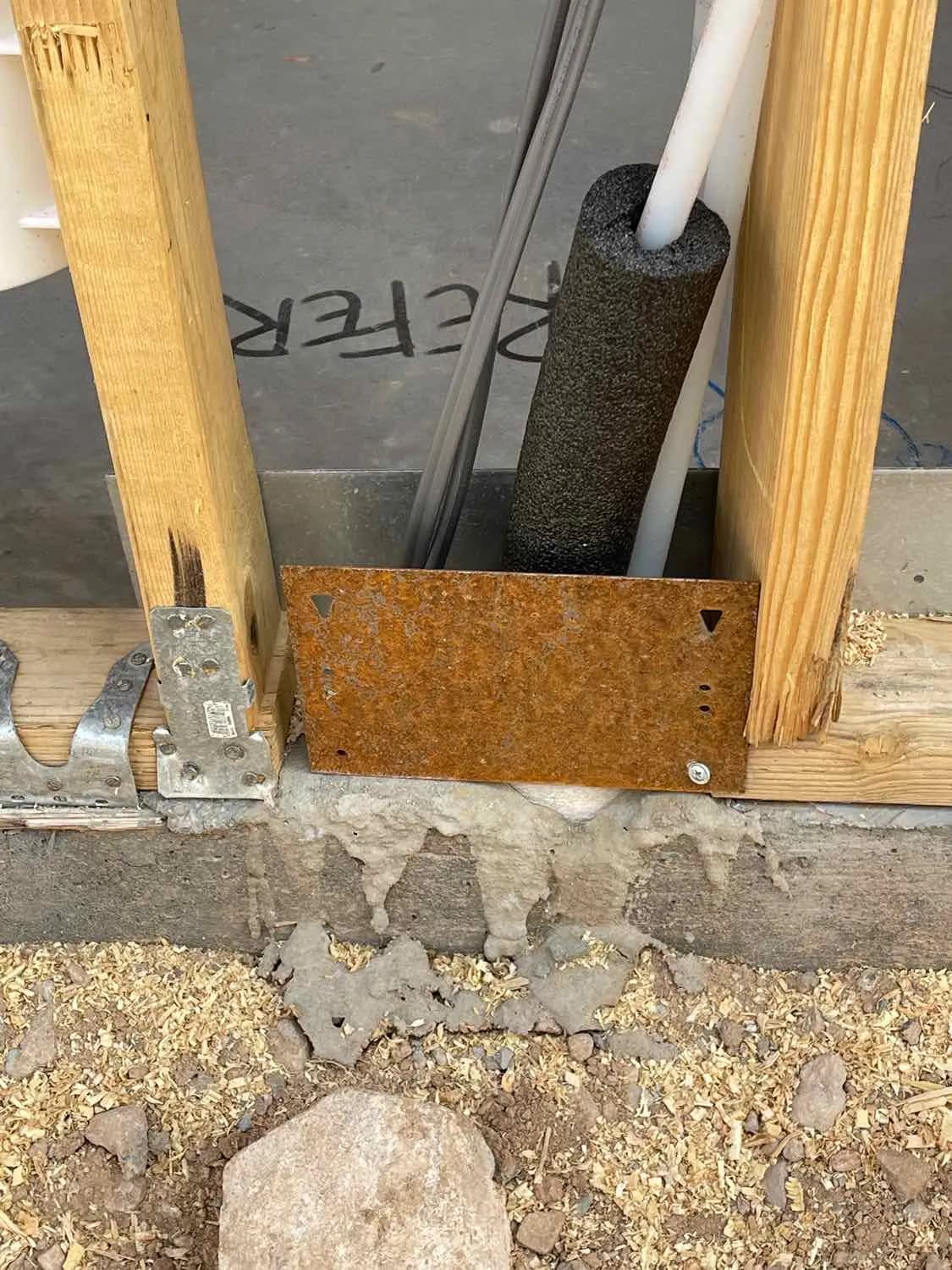
Slab-level plumbing and anchoring
Clear boundaries
What a new-construction inspection does not do
It is a workmanship review, not a code ruling. The same six-system scope is the standard residential inspection detailed on your inspection.
- This is not municipal code enforcement. AZHI does not issue or withhold a certificate of occupancy, cannot overrule the building department, and does not certify that the home complies with the adopted building code; that authority belongs to the city or county.
- It is not a review of the builder's plans, engineered drawings, or contract specifications. The inspection reports on observable installed condition and workmanship, not on whether the build matches the approved design documents.
- It cannot evaluate systems or areas that are not yet installed, energized, connected, or complete on the day of the visit; those are recorded as not-inspected, and may require a return look.
- Which construction phases AZHI performs (pre-drywall, final walk, 11-month warranty) and their scheduling requirements must be confirmed with AZHI directly, and access to the builder's active site is arranged through the builder, not guaranteed by AZHI.
- The inspection does not obligate the builder to fix anything; whether findings are addressed is governed by your purchase contract and warranty. It also makes no promise to find every defect or to predict future performance of the home.
Common questions
New-build questions we get asked
Building or closing on a new home? Talk the phases through first.
The city already inspected it and it passed. Why pay for another inspection?
The city or county inspection confirms that permitted work meets the adopted building code so the home can be occupied. It is a pass-or-fail check on code minimums, done for the permit, not a workmanship review done for you. A third-party inspection looks at how the home was actually installed and built and gives you an independent list of what you may want the builder to address. The two serve different purposes, and the municipal sign-off does not answer the question the private inspection answers.
What is a pre-drywall inspection and why does it matter?
It is an inspection done after framing and the electrical, plumbing, and mechanical rough-ins are in, but before insulation and drywall cover them. That is the only point at which those systems are visible without opening a finished wall. Once drywall is up, seeing them again means cutting into the home. If you want eyes on the structure and rough-ins, this phase has a hard deadline set by the builder's drywall schedule, so it has to be coordinated in advance. Confirm with AZHI whether this phase is offered.
Can you inspect anything, even parts of the house that are not finished?
An inspection reports on what is installed and testable on the day of the visit. Systems that are roughed-in but not yet energized, appliances not set, fixtures not connected, or grading and exterior work not yet done cannot be evaluated as finished work. Those items are recorded as not-inspected rather than passed. Timing the visit to when the phase you care about is genuinely complete is what makes the inspection worth doing, and anything not ready may warrant a return look.
Do I need my builder's permission, and will they act on the report?
Until you close, the home is the builder's active jobsite, so access is arranged through the builder or superintendent, who may set notice requirements or ask to be present. Whether the builder addresses the findings is governed by your purchase contract and warranty, not by the inspection itself. The report gives you documented, objective items to raise; how they are resolved is between you and the builder. Ask your builder how they handle third-party inspections before you schedule one.
Where we work
New-construction inspections across the Valley
- Scottsdale
- Tempe
- Mesa
- Chandler
- Gilbert
- Glendale
- Peoria
- Avondale
- Goodyear
- Buckeye
- Verrado
- Litchfield Park
- Tolleson
- El Mirage
- Surprise
- Waddell
- Youngtown
- Cave Creek
- Carefree
- Anthem
- New River
- Rio Verde
- Fountain Hills
- Paradise Valley
- Queen Creek
- San Tan Valley
- Apache Junction
- Gold Canyon
- Florence
- Casa Grande
- Maricopa
- Coolidge
- Sun City
- Sun City West
- Sun Lakes
Also worth knowing
The other stages
- Buyer's Home InspectionBefore you close, know exactly what you're buying, every major system, walked with you and explained.
- Pre-Listing InspectionFind the problems before a buyer does, so surprises never cost you leverage at the negotiating table.
- Pool & Spa InspectionPool and spa problems are stressful and expensive. Our certified process finds them before you buy.
Bob did a fantastic job. He was very professional and extremely knowledgeable on every aspect of our home. He explained and offered suggestions on how to fix the issues that he had discovered during his inspection. His final report was very detailed and was sent to us the same day as our inspection. I highly recommend AZ Home Inspection Services.
Book it
Get a price for your new-construction inspection
Send the property details and the phase you want inspected, and you get a quote and the next available dates back. Residential inspections start at $285.