
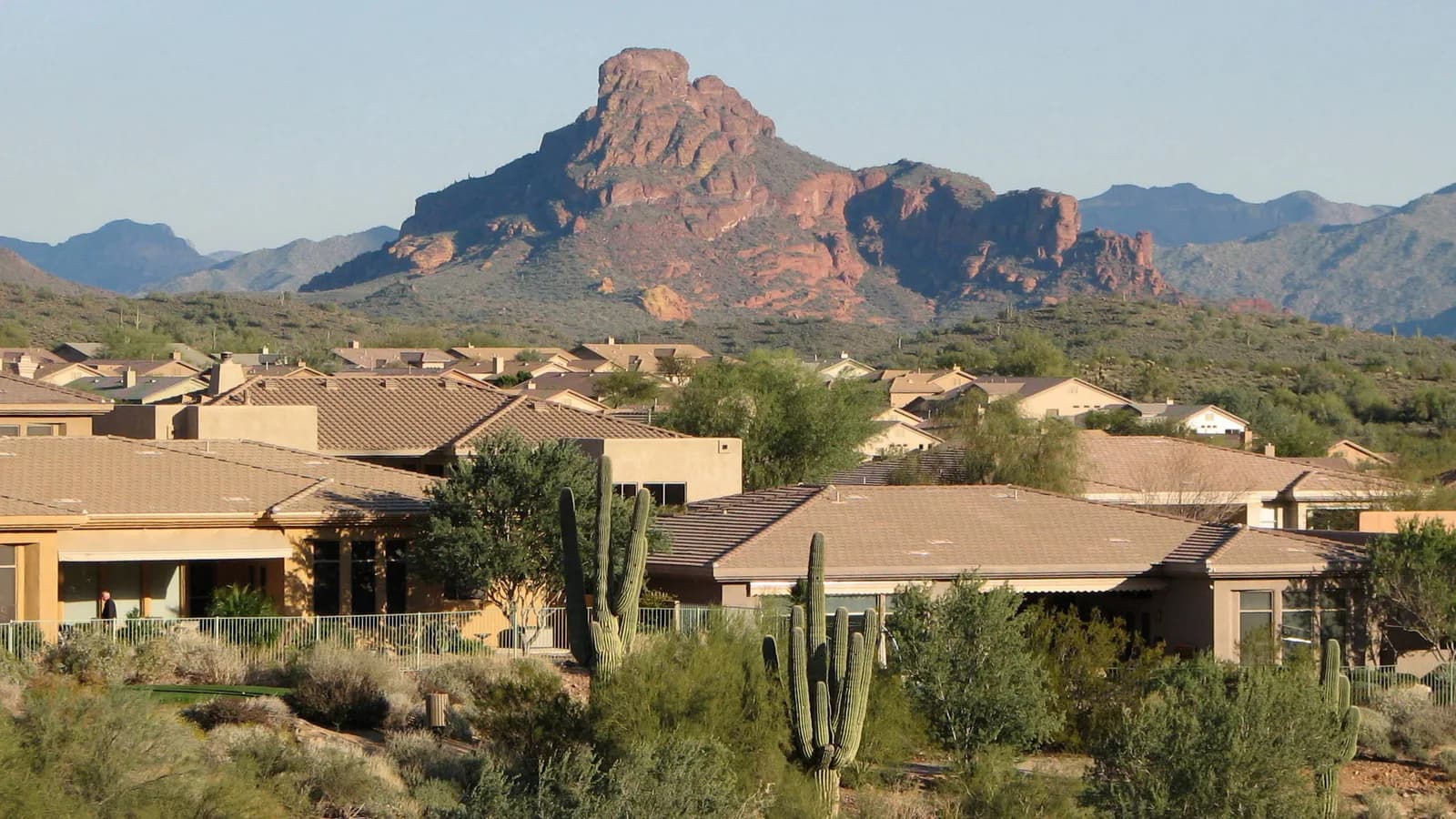
Fountain Hills, Arizona
Home inspection in Fountain Hills
A home inspection in Fountain Hills usually means a custom or semi-custom desert home set into a hillside, where tile roofs, stucco walls and relentless sun exposure drive most of what an inspector spends time on. Much of the town’s housing dates to the 1990s and 2000s, so roofing underlayment, HVAC and water heaters are frequently into a first or second replacement cycle. Booking an inspection before you close gives you an honest read on the roof, the mechanical systems and how water moves around a home built on sloped desert terrain.
- ASHI Certified Inspector
- From $285 residential
- Report on-site, same day
The Fountain Hills housing stock
What the local stock means for your inspection
Most of Fountain Hills's housing stock was built from the 1990s into the 2000s, so an inspection here tends to focus on aging tile-roof underlayment, first- and second-cycle HVAC and water heaters, and stucco and flashing details rather than the older wiring and plumbing surprises of mid-century stock.
- Fountain Hills began as a master-planned community in 1970 and incorporated as a town in 1989, so its housing ranges from earlier desert originals to newer custom homes.
- The town sits in the McDowell Mountain foothills northeast of Scottsdale, and much of its housing is set on hillside and canyon lots where site drainage matters.
Neighborhoods we inspect in Fountain Hills
- FireRock
- Eagle Mountain
- SunRidge Canyon
- Adero Canyon
- Eagles Nest
- Desert Canyon
And every other neighborhood in Fountain Hills. If your street is not listed, it is still covered.
On the ground here
What an inspector watches for in Fountain Hills
These are the items that come up most in Fountain Hills's housing stock. They are what to expect, not a verdict on any one home.
Underlayment age beneath desert tile roofs
On 1990s and 2000s homes the concrete or clay tiles often outlast the felt underlayment beneath them, so inspectors commonly watch for underlayment reaching replacement age even when the tile itself still looks sound.
Stucco cracks and roof-to-wall flashing
Stucco-clad walls, parapets and scuppers are typical of desert homes here, and inspectors look for cracking and for flashing or sealant that has weathered and hardened under years of intense sun.
Cooling equipment on a later cycle
Desert heat is hard on cooling equipment, so homes from this era are frequently on a second or third condenser or air handler, and an inspector notes the age and condition of what is currently installed.
Water heaters at or past service life
Original or first-replacement water heaters in 1990s and 2000s homes are often near the end of their typical service life, which is a routine item an inspector flags for planning.
Hillside drainage, retaining walls and grading
Many Fountain Hills homes sit on graded slopes and canyon lots, so inspectors pay attention to site drainage, retaining walls and how water is directed around and away from the foundation.
Early-generation supply lines in the oldest homes
The town’s earliest homes, from before the mid-1990s, can carry early-generation supply lines such as polybutylene, which an inspector notes for its known failure history.
Most relevant here
What Fountain Hills buyers ask about most
Given Fountain Hills' hillside lots, mixed-era housing stock, and pool-heavy properties, buyer inspections paired with pool and spa and termite evaluations tend to carry the most weight, with pre-listing inspections valuable for sellers on distinctive custom homes.
- Buyer's Home InspectionBefore you close, know exactly what you're buying, every major system, walked with you and explained.
- Pool & Spa InspectionPool and spa problems are stressful and expensive. Our certified process finds them before you buy.
- Certified Termite InspectionThe wood-destroying insect report (WDIIR) Arizona lenders ask for, tied to your inspection visit.
- Pre-Listing InspectionFind the problems before a buyer does, so surprises never cost you leverage at the negotiating table.
See every inspection service, available in Fountain Hills like every AZHI service.
Common questions
Inspecting a home in Fountain Hills
What does a home inspection in Fountain Hills usually focus on?
Because most Fountain Hills homes are 1990s and 2000s custom desert houses on hillside lots, an inspection here centers on tile-roof condition and underlayment age, HVAC and water heaters that may be on a later replacement cycle, stucco and flashing, and how water drains around a home on sloped terrain.
My Fountain Hills home has a tile roof. Will the inspector actually check it?
Yes. A tile roof can be evaluated from the roof surface where it is safe to walk, or from a ladder and other vantage points when walking the tile risks damaging it, and on homes of this era the key issue is usually the felt underlayment beneath the tile reaching the end of its life rather than the tile itself.
The home is on a hillside lot with mountain views. What extra should I be aware of?
Hillside and canyon lots in areas like Adero Canyon or Eagles Nest add retaining walls, graded slopes and drainage paths to the inspection, since how water moves around and away from the foundation is one of the more important things to get right on sloped desert terrain.
Bob was accessible and quick to schedule us. He worked well with our agent to inspect the home and gave us a thorough inspection report. His comprehensive services, guarantees and follow-ups gave us peace of mind. Would definitely recommend.
Book it
Schedule your Fountain Hills inspection
Buying or selling a hillside home in Fountain Hills? Reach out to schedule an inspection built around the town's graded lots, mixed-era construction, and desert drainage concerns.
Residential inspections start at $285. You get a price and the next available dates back.