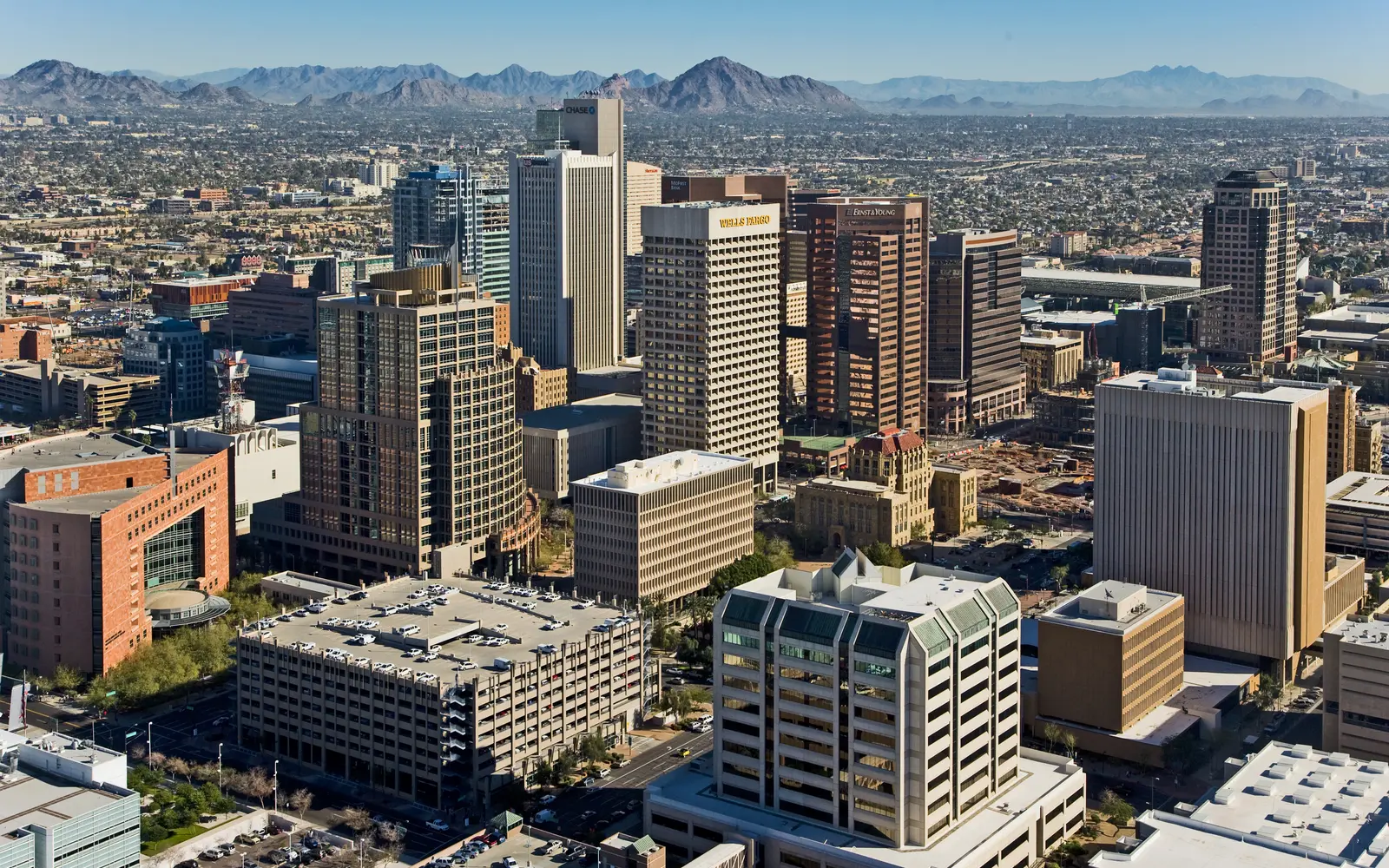
Phoenix, Arizona
Home inspection in Phoenix
A home inspection in Phoenix has to start with which Phoenix the house is in. The city is a set of urban villages, not one housing market: prewar and mid-century houses in the historic districts and Maryvale, large irrigated lots in Arcadia, tile-roof production homes in Ahwatukee and Desert Ridge, and newer tracts still going up in Laveen and the north valley. The same ASHI inspection covers each of them. What changes is where the time goes, from cast-iron drains and flat roofs near downtown to pools, monsoon drainage and first-cycle equipment on the outer villages.
- ASHI Certified Inspector
- From $325 residential
- Report typically same day
The Phoenix housing stock
What the local stock means for your inspection
Central Phoenix still holds a large share of homes built before 1978, including the historic districts north of downtown and John F. Long's Maryvale tracts from the 1950s and 1960s, while Ahwatukee grew as a master-planned village from the late 1970s and Laveen, Desert Ridge and the north valley added most of their houses after 2000.
- Phoenix was incorporated in 1881. It is the Maricopa County seat and the Arizona state capital.
- The city plans itself as urban villages, including Encanto, Alhambra, Camelback East, North Mountain, Ahwatukee Foothills, Laveen and Desert View, so two Phoenix addresses can be different inspections.
- Several central neighborhoods, notably Arcadia, still receive SRP flood irrigation in addition to the potable water service.
Neighborhoods we inspect in Phoenix
- Willo
- Encanto-Palmcroft
- Coronado
- F.Q. Story
- Arcadia
- North Central
- Maryvale
- Sunnyslope
- Ahwatukee Foothills
- Desert Ridge
- Laveen
- Downtown and the Roosevelt district
And every other neighborhood in Phoenix. If your street is not listed, it is still covered.
On the ground here
What an inspector watches for in Phoenix
These are the items that come up most in Phoenix's housing stock. They are what to expect, not a verdict on any one home.
Historic districts north of downtown
Willo, Coronado, Encanto-Palmcroft and F.Q. Story hold houses that predate modern wiring and plumbing practice. The inspection looks at the service panel, ungrounded or later-modified circuits, cast-iron or clay drain lines, and rooms or porches that were enclosed after the house was built. Paint and older finishes from before 1978 can be sampled separately for lead and asbestos.
Flat roofs and monsoon ponding
Many central ranches still have a low-slope or foam roof rather than tile. In a monsoon storm the failure is usually at the scuppers, the parapet, and any patch where water stands. Tile roofs on newer Phoenix houses fail differently: the tile can look fine while the underlayment, valleys and pipe flashings are what actually leak.
Flood irrigation on Arcadia and central lots
Parts of Arcadia and other central neighborhoods still take SRP flood irrigation, which is a separate system from the drinking water. Berms, valves and grading decide whether that water stays in the yard or soaks the stem wall. Damp soil at the slab is also where subterranean termites show up, so a wood-destroying-insect report is a common add-on on these lots.
Pools on Arcadia, North Central and Ahwatukee lots
A pool is close to assumed in those neighborhoods. The inspection covers the barrier, the deck and how it drains, visible equipment and plaster, and whether a later patio cover or pet door broke the barrier. The pool is an add-on, quoted with the house, not a guess from the curb.
Maryvale's postwar production houses
Maryvale was built as a large production community beginning in the 1950s. Houses of that era often still have, or have only partly replaced, original supply and drain piping, panels that were sized for a much smaller electrical load, and roof coverings that have been redone more than once. Each house is read on its own updates, not on the year the subdivision opened.
Newer villages: Laveen, Desert Ridge, the north valley
Houses from the 2000s are at the age when the original water heater, condenser and tile underlayment are due for a dated look. Houses still under construction, common in Laveen and along the northern edge, are a different visit: open-wall framing before drywall, a final before closing, and a warranty walk before the builder's first year ends.
On this property
Which Phoenix you are buying in
Downtown and the Roosevelt district are a third case. Many of those purchases are condos or townhomes. The inspection covers the unit: the panel, the HVAC, the plumbing you can see, the windows and the interior. The roof, the structure and the shared drains are often the association's, so the report says what was visible in the unit and what you should read in the association documents. That is a different afternoon from a single-family house in Ahwatukee.
Services on a Phoenix house are chosen from the building, not from a package. Buyers of older central homes usually add a sewer scope and, when the house predates 1978, lead and asbestos testing. Pool and spa inspections are common in Arcadia, North Central and Ahwatukee. Irrigated lots often add a termite report. New construction and the 11-month builder warranty are the visits that fit Laveen and the north valley. Commercial buildings are scoped and priced on their own, not as a large version of this residential checklist.
Most relevant here
What Phoenix buyers ask about most
Phoenix buyers most often add a sewer scope on older central houses, a pool and spa look in Arcadia, North Central and Ahwatukee, lead and asbestos testing on pre-1978 homes, and a new-construction or warranty visit in Laveen and the north valley. Commercial buildings are scoped separately.
- Buyer's Home InspectionBefore you close, know exactly what you're buying, every major system, walked with you and explained.
- Sewer Scope & Camera InspectionThe main sewer line is buried and invisible during a standard inspection. A camera shows what is really down there, before it becomes your problem.
- Pool & Spa InspectionPool and spa problems are stressful and expensive. Our certified process finds them before you buy.
- Lead & Asbestos TestingOlder homes can hide lead paint and asbestos you cannot spot by looking. Testing before you disturb them protects your health and your remodel.
- New Construction InspectionA brand-new build still needs an objective third party. City and county inspectors do not catch everything.
- Commercial Property InspectionCommercial properties come with their own systems, codes, and risks. Our team brings the same thorough, experienced approach to commercial buildings that we bring to every residential inspection.
See every inspection service, available in Phoenix like every AZHI service.
Common questions
Inspecting a home in Phoenix
What makes a home inspection in Phoenix different from one in Scottsdale or a West Valley suburb?
Phoenix is not one housing stock. A Willo or Maryvale house is a mid-century or older building, often with later remodels, flat or replaced roofs, and original drains. An Arcadia lot adds a pool and flood irrigation. An Ahwatukee or Desert Ridge house is closer to a master-planned resale, and a new Laveen house is a builder-stage inspection. AZHI uses the same ASHI standard everywhere. The neighborhood decides where the time goes.
I am buying an older home in Willo, Coronado or Maryvale. What usually needs a closer look?
Plan on the electrical service, any circuits that were added later, the drain line to the street, and the roof drainage, especially if the roof is low-slope. Homes built before 1978 can also use a separate lead and asbestos test before you remodel. A sewer camera is worth adding when the drain line may be as old as the house. Residential inspections start at $325, and the camera, the pool and the lab tests are quoted on top of that.
Do Phoenix tile roofs and flat roofs fail the same way in monsoon season?
No. On a flat or foam roof the inspector is looking for ponding, failed coatings, and scuppers or parapet flashings that let wind-driven rain in. On a tile roof the tile itself often still looks intact. The leaks start at the underlayment, the valleys and the penetrations. Either way, a monsoon is a short, hard rain, so grading that sends water toward the foundation matters as much as the roof covering.
How much does a Phoenix home inspection cost, and do you publish an office address?
Residential home inspections start at $325. The quote moves with the home's size, age and features, and with add-ons such as a pool, a sewer scope, a termite report or a solar evaluation. Call 480-805-2025 or send the address. AZ Home Inspection Services does not publish a street address. Inspectors come to the property. The company has been locally owned since 2005.
I had an excellent experience with AZ Home Inspection Services. Bob and Stephen were extremely professional, thorough, knowledgeable, and attentive to detail. They did an outstanding job inspecting the home and explaining everything clearly. I have no complaints whatsoever and would highly recommend Bob and Stephen to anyone looking for a professional and trustworthy home inspection. Excellent work!
Book it
Schedule your Phoenix inspection
Send the Phoenix address, the neighborhood if you know it, and the year built. You get a price and the next available dates back.
Residential inspections start at $325. You get a price and the next available dates back.